
The Testament of Jean Meslier
Curé of Étrépigny and Balaives, written in secret over many years, that it might be read only after my death
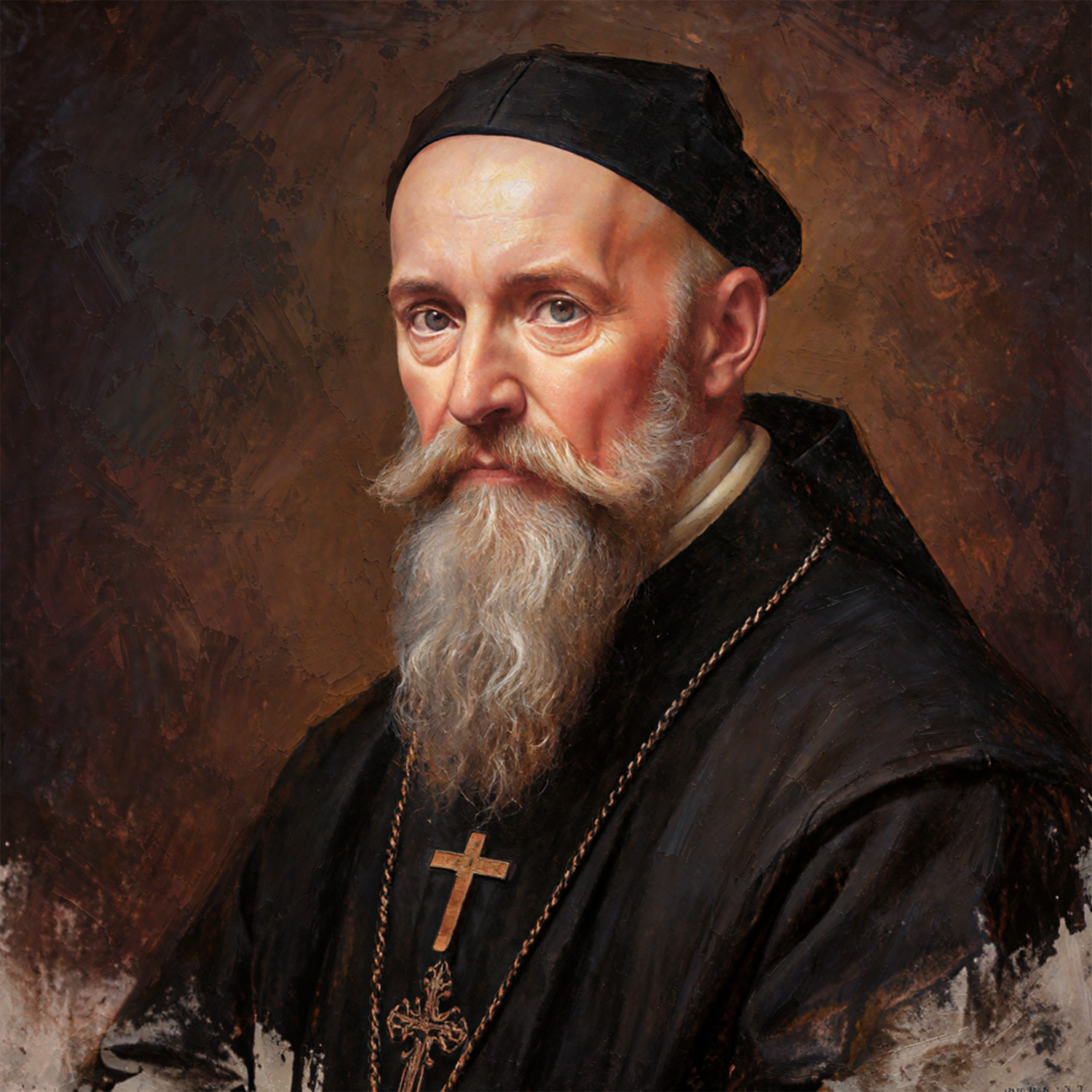
To My Parishioners and Whoever Else May Read This
You who heard me preach for more than thirty years, forgive me now, for almost everything I told you from that pulpit was not what I believed in my heart. I spoke of God, of Christ, of the Virgin, of the sacraments, of Heaven and Hell, because it was my office to speak so, because I was clothed and fed and given a certain standing among you to speak so, and because to speak otherwise while I lived would have cost me my liberty, my livelihood and, very possibly, my life. I did not have the courage of a martyr for the truth. I had only the smaller, colder courage of a man who resolved that after his death, when nothing more could be taken from him, he would at last set down what he truly thought, in full, and leave it behind as his real legacy, in place of the false one I gave you Sunday after Sunday.
I do not offer you a new religion, a new church, a new set of rites to replace the old ones. I offer you my reasons, gathered and turned over across a lifetime of secret reading and secret doubt, for believing that all religions, without exception and, most particularly, the Christian religion in which I was raised, ordained and paid to serve, are the invention of men, begun in ignorance, propagated by fear and maintained, quite deliberately, by those who profit from your obedience: your priests, lords and kings, who have found in the doctrines of religion the most perfect instrument ever devised for keeping a laboring people docile.
I have divided what follows into parts, as a sermon is divided into points, though what I preach now is the opposite of everything I preached before. Read it slowly. Test each claim I make against your own reason and your own experience of the world, exactly as I was never able to invite you to do from the pulpit. That, in the end, is the only method I trust and the only one I ask you to trust as well.
Why I Write, Why I Waited and What This Confession Cost Me
I must first confess my own weakness plainly, for I would be as dishonest in death as I was in life, if I did not. Every day at the altar, I pronounced words I had long ceased to believe. Every day, I lifted a wafer before your eyes and called it the body of God, knowing it to be flour and water and nothing more. I hesitated for years, then decided, then hesitated again, to leave the priesthood outright and declare myself. Each time, fear won. I saw what became of men who spoke too plainly against the Church in this kingdom (the ruin, the imprisonment, sometimes the flame) and I confess I loved my quiet more than I loved the truth, for most of my working life.
I do not ask you to admire this. I ask you only to understand why my testimony comes to you now, after my death, rather than from my own mouth while I lived among you: because it was the only form of honesty available to a coward with a benefice to protect. I chose to spend my evenings, over many years, copying out in a careful hand everything I could not say aloud, reasoning through the arguments of the philosophers I read in secret, testing them against the Scriptures I knew better than any of you and setting down, point by point, why I had come to regard the entire edifice of the faith I served as a structure built on sand, profitable sand, guarded sand, but sand nonetheless.
I want to say one further thing before I begin the arguments proper. I do not write out of hatred for you, my former parishioners, nor even out of hatred for my brother priests, many of whom I believe are as sincerely fooled as the people they instruct, having been raised in the same doctrines from childhood and never given the leisure, the books or the permission to doubt them. My anger, such as it is, falls upon the system itself and upon those at its top who I believe know very well what they are doing, who preserve the mystery of their doctrines precisely because clarity would dissolve their power, and who have arranged the whole apparatus of church and state so that the man who questions it loses his bread, his liberty or his life, while the man who repeats it without question is rewarded with office, income and honor.
How Religions Are Made and Why People Believe Them
I begin with the plainest observation available to any traveler, any reader of History, or any man simply willing to think for an hour about what is in front of him: Every nation on Earth has its own religion, and each is utterly certain that its own alone is true, while regarding all the others as childish fable. The Turk laughs at the Christian’s Trinity as an incoherent multiplication of gods. The Christian laughs at the Turk’s paradise of gardens and rivers as a carnal fantasy unworthy of true religion. The missionary sent among nations further off still returns to tell us, with a straight face, of idols and superstitions even more absurd than either (never once pausing to notice that his own listeners at home hold their own religion with exactly the same fervor and on exactly the same grounds), namely that they were told it was true from the cradle and never permitted seriously to question it.
I ask you to sit with this observation rather than pass over it, because it dissolves, on its own, the single strongest argument every believer offers for his faith: that he feels its truth so certainly in his heart. If sincerity of feeling were proof of truth, then all these mutually contradictory religions would be true simultaneously, which is absurd on its face, since they cannot all be right about a Trinity that both is and is not, about a Christ who both did and did not die for man’s sins, about a Mohammed who both is and is not the final prophet. What actually varies from nation to nation is not the truth of things, but the accident of birth. A child born on the banks of the Ganges becomes, with the same total sincerity, a worshiper of Vishnu. A child born in Constantinople becomes, with the same sincerity, a follower of the Prophet. A child born in Étrépigny becomes, with the same sincerity, a communicant of Rome. Each supposes his particular accident of geography to be a special revelation of the one true god to his one true nation. It cannot be so for all of them, and I see no honest reason to suppose it is so for any of them, mine included.
How, then, do religions actually arise and by what machinery do they endure for centuries once begun? I do not believe it is by miracle or genuine revelation in any case I have examined. I believe it is by the perfectly ordinary and observable operations of fear, ignorance, wonder and self-interest, working together across generations.
Fear and ignorance are the soil in which every religion first takes root: Consider the earliest men, lacking any of the learning we now possess, standing beneath a sky that thundered, watching crops fail without explanation, burying children carried off by diseases whose causes were wholly unknown to them. Such men, unable to explain the causes of the things that terrified and afflicted them, did what frightened and ignorant men always do: they imagined invisible persons behind the visible events (spirits of the storm, spirits of the harvest, spirits of sickness and health) and then invented rites, sacrifices and prayers by which those invisible persons might be flattered or appeased. This is not a peculiarity of one people. I find the same pattern, with only the names and rituals changed, in every nation whose history I have been able to study.
Cleverness and self-interest are what shape that raw fear into an organized religion with priests at its head: Once the belief in invisible powers exists among a people, it takes only one sufficiently clever man in any generation to notice that whoever can claim special knowledge of, or special favor with, those invisible powers thereby acquires real power over his fellows, for frightened men will pay a great deal, in obedience, in labor and in goods, to be told how to escape a suffering they cannot otherwise control or even understand. From this single insight, repeated independently in a hundred different valleys and river deltas across Earth, arise the priesthoods of the world: the oracle, the shaman, the augur, the druid, the brahmin and, in time, the ordained clergy of the church I served. Each such priesthood, once established, discovers a second insight even more useful than the first: that its power depends entirely on the laity never being permitted to test its doctrines by ordinary reason. And so, each priesthood, mine no less than any pagan one, wraps its central claims in language calculated to be too mysterious, too sacred, too dangerous to question (a “mystery” we call it), and warn that too much inquiry into a mystery is itself a species of sin, which is a most convenient rule for anyone wishing to prevent inquiry altogether.
Alliance with worldly power is what preserves and multiplies the invention once it exists: A priesthood, however clever, cannot rule a kingdom by itself. It needs the sword. A king, however strong, cannot rule a kingdom by the sword alone forever. He needs the willing, or at least the resigned, obedience of the great mass of his subjects, which the sword alone cannot buy at a sustainable price. Between these two needs, priest and king strike their ancient bargain, seen in every century of the History I have read: The priesthood teaches that the king rules by the will of God (that to resist him is to resist Heaven itself and that the poor man’s proper posture toward his poverty is patience, since his true reward waits in a life to come) and the king, in exchange, grants the priesthood lands, immunities, tithes and the coercive backing of his law against any who would question the priesthood’s authority. I watched this bargain worked out daily, in miniature, in my own parish, where the tithe collected in God’s name went too easily and too generously toward the comfort of those who collected it, while the peasants who paid it, often at real cost to their own families’ bread, were told that their sacrifice pleased Heaven.
The Christian Scriptures Examined as I Actually Examined Them
Since Christianity is the religion I was ordained to teach and knew most intimately, I set down at greatest length why close study of its own foundational texts, undertaken not as a believer defending a conclusion, but as a reader following an argument, persuaded me of its falsehood.
On the contradictions within the text itself: I read the Bible across many years not merely to preach from it, but to test it, and I found it riddled through with internal contradiction of a kind no genuinely inspired and unified text ought to contain. The first and second chapters of Genesis give two different orders of creation that cannot be reconciled by any honest reading. The genealogies offered by Matthew and by Luke, both purporting to trace the lineage of the same man through the same royal line, do not agree with one another. The four Gospels, all claiming to record the same events within living memory of eyewitnesses, disagree among themselves on the sequence of the resurrection appearances, on which women came to the tomb and what exactly they were told there, on the precise last words spoken from the cross and on a great many smaller details besides, the kind of details that careful and consistent eyewitness testimony does not confuse, but that legend, retold and reshaped across decades by different communities before ever being written down, confuses constantly. A book that cannot agree with itself on matters as checkable as a genealogy or the order of a morning’s events gives me no rational confidence whatsoever in its claims upon the largest and least checkable matters of all: the nature of God, the fate of the soul after death, the origin and end of the world.
On the miracles claimed within it: I found no miracle recorded in Scripture that could not be doubted on precisely the grounds by which believers themselves would doubt a similar tale told of a rival religion. Each was witnessed, by the text’s own account, chiefly by persons already disposed by faith to see wonders, each was recorded not at the moment of its supposed occurrence, but years or decades afterward, by authors with the strongest possible interest in their community’s central claims being believed, and each has been preserved and copied down to us by an institution whose entire worldly power depends upon those claims continuing to be believed. Weighing all this, I find it very much easier to believe that ordinary men, living in an age with no experimental science, no skeptical press and a deep cultural hunger for signs and wonders, told and retold extraordinary tales that grew larger and firmer with each retelling (as such tales demonstrably do in every age and country I have ever read about, my own included) than to believe that the settled order of Nature was suspended repeatedly for the benefit of one small sect in one corner of the Roman world.
On the prophecies said to foretell Christ: Examined honestly and in their own original context, the verses regularly cited as prophecies of the Messiah were, in the main, written to address the political circumstances of Israel in the prophet’s own lifetime and have been detached from that context and refitted, centuries after the fact, to whatever events the Church wished them to predict. This is not prophecy. It’s a man who paints his target around the arrow after it has already landed and then marvels aloud at his own excellent aim.
On the Incarnation and the Trinity: I spent more hours than I can count, both as a student for the priesthood and afterward, trying honestly to make coherent sense of a doctrine that I was nonetheless required to teach as settled truth every Sunday of my working life: that God is three distinct persons and yet one single substance, that this god, infinite and existing outside of time, confined the whole of himself into the womb of a Judean peasant woman without in any way diminishing the portion of himself that remained, as it were, at large in Heaven, that he then permitted himself, in the person of the Son, to be arrested, humiliated and executed by the very creatures he had made, in order to satisfy a demand for justice that he himself, in the person of the Father, had set, for an original sin that he, being all-knowing, had foreseen from before the creation of the world and could, being all-powerful, have simply prevented. I never found this to be a mystery in any sense that ennobles the word. I found it to be a plain contradiction, dressed in reverent and unfamiliar language precisely so that the ordinary believer, fearing the sin of impiety, will decline to ask of it the plain question he would ask at once of any similar claim made about anything else in his experience.
On the character of the god thus described: The god of the Old Testament, whom I was bound every week to describe to you as infinitely good, infinitely just and infinitely merciful, is on the plain text of that same Scripture a being who commands the wholesale slaughter of entire peoples, including their infants, who threatens to visit the sins of the fathers upon children to the third and fourth generation, who hardens Pharaoh’s heart against his own better inclination and then punishes Pharaoh for the very hardness he himself instilled, and who condemns to eternal torment those who fail to believe correctly in him, despite having left the very fact of his own existence a matter of profound and endless dispute among the very nations he supposedly created to know him. A god possessed of true omnipotence and true benevolence and genuinely wishing to be believed in, could have made his existence as self-evident and undeniable to every nation as the Sun in the sky. That he has, instead, left it a matter resolved differently and with equal sincerity, by every people on Earth, is to me the strongest possible evidence that no such being stands behind any of these accounts and that what we are examining in every case is the work of men, not of God.
Against the Immortality of the Soul and For a World of Matter Only
I turn now from the particular claims of Scripture to the deeper claim that underlies not only Christianity, but nearly every religion I have studied: that man possesses, in addition to his visible body, an invisible and immaterial soul, wholly distinct in substance from matter, which survives the body’s death to be rewarded in a heaven or punished in a hell.
I found no genuine need for this hypothesis and a great deal of ordinary, everyday evidence against it, once I permitted myself to look plainly at what I already knew from simple observation of the sick, the aged and the injured among my own parishioners. Everything we can actually observe of human thought, memory, feeling and personality, we observe operating through the body and failing precisely as the body fails. A blow to the head disorders the reason as surely as it bruises the flesh. A fever alters the temper and confuses the memory of even the most pious man. Old age, well before it brings death, is seen to erode memory, judgment and even a person’s settled character, sometimes leaving a once-gentle man bitter, or a once-sharp mind wandering and childlike, long years before the body itself finally gives out. If the soul were truly the immaterial and independent thing the theologians describe, merely housed in the body as a tenant is housed in a rented room, I can see no reason why it should wax and wane in lockstep with the health of that room’s walls. It is, I concluded after much turning of the question, a far simpler and far better supported conclusion (better supported, that is, by everything we can actually examine with our own eyes rather than merely take on the authority of men in vestments) that thought and feeling are not a separate substance breathed into the body from elsewhere, but are themselves the activity of a sufficiently intricate body, exactly as digestion is the activity of a properly functioning stomach, and not a separate spiritual substance haunting it.
From this I was led, across years of quiet reading in philosophers the Church would not have wished me to read, to a still larger conclusion, which I set down here, though I know it will strike many of you as the most shocking claim in this whole testimony: I do not believe the world was created by any intelligent god at all, in the beginning of time, out of nothing. I believe instead that matter itself is eternal — that it has always existed, requires no prior cause to explain its existence and is by its own nature in a condition of perpetual motion and perpetual rearrangement. This claim will seem strange only until you notice that it’s no stranger and considerably simpler than the claim it replaces, for the theologian who insists that the world must have a Creator because nothing comes from nothing is immediately asked, and never satisfactorily answers, what, then, created the Creator, and if the Creator can simply exist eternally and uncaused, I see no remaining reason of logic why matter itself should not simply exist eternally and uncaused, without the unnecessary addition of an invisible, intelligent being standing behind it, for whose existence not one particle of genuine evidence has ever been produced. Matter in ceaseless motion, acting upon itself by cause and effect across incalculable stretches of time, is fully sufficient, to my own reason at least, to account for the formation of worlds, of living bodies and even of a brain intricate enough to produce the very thought that is presently examining the question, without need of a designer standing outside the whole process and arranging it, any more than a river needs a mason standing beside it to carve out its banks as it flows.
What the theologians call “God”, on this view, is at bottom only a name we have given to the causes of Nature that remain, for the time being, unknown to us: a personification of our own ignorance, elevated by long habit into an object of worship, so that what began as an honest confession of “we do not yet know why this happens” hardens, across generations, into the confident assertion “God did this”, which explains nothing at all, but merely stops the question from being asked further.
If there is, then, no immaterial soul distinct from the body, there is no part of us left over to survive the body’s dissolution and, therefore, I believe, no heaven remaining to be hoped for and no hell remaining to be feared. I set this down plainly, my former parishioners, not to rob you of comfort in your griefs, but to return you to what I believe to be the truth of your condition, for a comfort purchased at the price of a falsehood serves, in the end, chiefly those who profit from your continuing to believe it, namely those very men who hold out to you the promise of a perfect justice in the next life on the precise condition that you not disturb, by word or deed, the very real and remediable injustices of this one.
Against Free Will as the Priests Teach It
Bound up closely with the doctrine of the immortal soul is the doctrine of a free will, said to choose between good and evil quite independently of any prior cause, so that man may justly be rewarded or damned everlastingly for the choices that will makes. I examined this doctrine as carefully as I examined the others and could not accept it either.
Consider any act of will you have ever actually observed in yourself or in another person and trace it back as far as your honesty permits. You will find, in every case I have ever been able to examine without flinching away from the answer, that the act of willing arose from some prior cause sufficient to produce it: from the man’s native temperament, from the manner of his upbringing, from the hungers and appetites of his body at that moment, from the particular circumstances pressing upon him, from the opinions instilled in him since childhood by parents and priests he never chose. To say that the will is somehow entirely free of all such causes (that it is, in the strict sense, an effect without any cause whatsoever) is to claim for the will alone an exemption from the very principle of cause and effect that governs every other event we observe in Nature, and I could find no honest ground on which to grant human willing this singular and convenient exemption.
I came, in time, to suspect the true purpose the doctrine serves, which is not philosophical but practical: It exists chiefly to make it appear just that a man be punished everlastingly for being precisely what his nature, his upbringing and his circumstances (none of them chosen by him) made him to be. It shifts the whole burden of blame away from the Creator, who is supposed to have designed each man’s nature in the first place, and lays it instead entirely upon the creature, who never asked to be designed at all, still less designed as he was.
The Deceptions and Devices of the Priesthood, as I Observed Them from Within
Having set down the errors of the doctrine itself, I turn now to the practical craft of maintaining belief in it, which I observed at close quarters for thirty years as one of its practitioners, and which I set down here in some detail because I believe the mechanism matters as much as the doctrine.
The cultivation of mystery where clarity would be fatal: I noticed early in my career that the doctrines most fiercely insisted upon by the Church were, almost without exception, the very doctrines least capable of being clearly explained (the Trinity, transubstantiation and predestination) and that this apparent weakness was cleverly turned into a supposed strength, since a doctrine too plain to be doubted commands little awe, while a doctrine too confusing to be fully grasped can always be defended by appeal to the limits of human reason before the majesty of God, which is a most convenient defense, since it can be raised against any objection whatsoever without ever actually answering it.
The discouragement of independent reading and inquiry: The Church that I served did not encourage its laity to read the Scriptures for themselves in their own tongue, still less to read the philosophers, ancient or modern, who had raised the very doubts I have set down in this testimony. It encouraged, instead, a trust placed in the clergy’s own interpretation, delivered from the pulpit, of texts the listener was rarely equipped or permitted to examine independently. I do not think this was accidental. A doctrine confident of its own truth invites scrutiny; a doctrine that discourages scrutiny at every turn has, I came to believe, good reason of its own to fear what scrutiny would find.
The confessional as an instrument of knowledge and control: Through confession, the priesthood came to possess an intimate knowledge of the private failings, fears and secrets of an entire population, freely surrendered under the belief that this surrender was necessary to the soul’s salvation, a knowledge that, I observed more than once among my brother clergy, could be and was used, subtly and not so subtly, to secure influence, compliance and advantage that had nothing whatsoever to do with the eternal welfare of the penitent.
The tithe and the general traffic in the sacred: Masses said for the dead, indulgences sold or granted, tithes collected under threat of spiritual penalty, burial itself frequently made contingent upon proper payment. I observed across my whole career a steady traffic conducted in the coin of the sacred, in which fear of postmortem suffering was made to yield a very ordinary and worldly revenue, collected with a regularity that any tax-farmer would have envied, from a population often too poor to spare it.
The Uses of Religion to Tyranny — On Kings, Nobles and the Poor
Here I set down what troubled me most across thirty years among the poor of my own two parishes: Not merely that the doctrines of the Church were false, which is a matter that might otherwise be left to philosophers to dispute at their leisure, but that their falsehood was put to work, daily and deliberately, against the very people who could least afford to be its victims.
I watched peasants labor from before dawn until past dark, taxed by their lord, tithed by their church, conscripted without appeal into their lord’s wars and left in years of poor harvest to go hungry while the granaries and the tables of the great remained full — and I watched all of this told to them from the very pulpit I occupied and by the very mouth I preached with, as the ordained and even the loving will of God, against which murmuring was itself a species of sin and for which their true and only reward lay safely deferred to a life that, on the reasoning I have already set down, I do not believe exists at all. I came, across those years, to see the full depth of the wrong being committed: Religion was not merely mistaken in its claims about the nature of the Universe. It was actively and profitably useful to those who governed, precisely and specifically because it taught the governed to bear their condition without complaint and to direct whatever hope they retained away from any improvement of this life and toward an imagined improvement of a life to come, which conveniently required nothing whatsoever of their lords in the meantime.
Kings, in the kingdom I lived and died in, claim to reign by a divine right conferred directly by God and the priesthood, in exchange for lands, privileges and the protection of the crown’s law against its critics, blesses that claim from every pulpit in the land, mine among them, for far too many years. It is, when looked at plainly and without the reverence I was trained from boyhood to bring to it, nothing more than a bargain struck between throne and altar, over the backs and out of the labor of a people who are made, through no fault or choice of their own, to support both institutions at once and are told by both, in a single coordinated chorus, that their subjection to each is sacred and their complaint against either is sin.
I do not believe any man is born booted and spurred, ready-made to ride his fellow man, nor do I believe any man is born saddled, ready-made to be ridden. I believe, on the plainest examination of what we actually are as creatures (the same flesh, the same appetites, the same capacity for reason and for suffering in the meanest peasant as in the greatest lord) that all men are born substantially equal in their nature and that the vast and often cruel inequality of condition, so visible among them, is not the design of any god, but the accumulated accomplishment of ancient conquest, long-perfected fraud, and the patient, generation upon generation, habituation of the poor to an obedience they are taught from the cradle to mistake for virtue, an habituation in which I, to my continuing shame, played my own small and complicit part for thirty years.
I do not, writing now, counsel the patient endurance I was paid my whole career to counsel from that pulpit. I counsel, instead, that my former parishioners, and whoever else this testimony may reach, first come to see plainly that the chains binding them are forged by men and maintained by men, not laid upon them by any god, since what men alone have forged men in time may yet strike off. I will not pretend to you that I know by what precise means a poor, scattered and deliberately divided people, kept short of learning and long on fear on purpose, might accomplish such a striking-off, still less that it could be accomplished gently or without great cost. I am an old man near his own grave, and such questions belong properly to a generation with more years before it than I have left behind me. I insist only upon the first and necessary step, without which no other is even conceivable: that the chain first be recognized as a chain and not mistaken, as I helped you for so long to mistake it, for a blessing freely given by a loving god.
What I Would Put in Religion’s Place
I do not ask you, in laying down these arguments, to take up some new worship in place of the old one, nor to exchange one set of priests for another. I ask you, instead, to place your confidence where it can actually be tested and verified: in your own reason, honestly applied, in the plain evidence of your own senses and your own experience of the world, and in the natural affections that bind a man to his family, his neighbors and his fellow creatures, without any need of a threatened hell to compel him toward ordinary decency, or a promised heaven to bribe him toward it.
I have known, across my years, unbelievers who conducted themselves with more honesty, more charity and more genuine kindness toward their neighbors than a good many devout and regular communicants I could name, which persuades me, as much as any argument, that virtue does not in fact depend upon the fables we are taught in order to secure it. The fear of a judge we can never see, I came to believe, chiefly disciplines the timid, who would very likely have behaved decently regardless. It does very little to restrain the truly ruthless, who learn soon enough how to purchase absolution, or how to sin quietly, or simply how to disbelieve when disbelief serves their advantage. A settled, natural love of one’s fellow man, grounded in the plain and undeniable recognition that we share a single common nature and a single common fate upon this earth, seems to me a far surer foundation for a decent life than any doctrine of reward and punishment in a world I no longer believe exists, and it is, besides, a foundation that asks no priest’s toll, no tithe and no obedience to any earthly master to maintain it.
Closing Words
I set down these thoughts in the greatest secrecy, across many years, copying and recopying them by my own hand in the quiet hours after my parish duties were done, knowing full well that their discovery while I lived could bring me ruin and knowing equally that their discovery after my death could bring me no reward of any kind, in any world, since I do not believe, for all the reasons I have here set down, in any reward beyond this one. I set them down nonetheless, because it came to seem to me, as I grew older and nearer my own end, the one wholly honest act still available to a man who had spent the greater part of his working life in a comfortable and compelled dishonesty, drawing his bread from a doctrine he had long ceased to believe.
If what I have written here should persuade even a few among my former parishioners to examine, with their own reason and for the first time freely, what they were for so long merely taught to accept without question, then this testimony, unlike every sermon I gave you across thirty years from that pulpit, will at last have been worth the giving. I am sorry, in the end, for only one thing above all others: that I did not have, while I yet lived among you and might have done you some real good with it, the plain courage to say to your living faces what I have here been able to say only to your memory of me.