I was born in 1966 in Castro, Brazil, but spent my childhood in Rio de Janeiro. My mother took me (and my three brothers) to the Adventist Church. At the age of 22, I stopped being a sheep and became a freethinker.
I’ve always enjoyed drawing (as a kid, I dreamed of becoming a comic book and cartoon artist), photographing and singing. Singing ended up becoming the main way I express myself artistically.
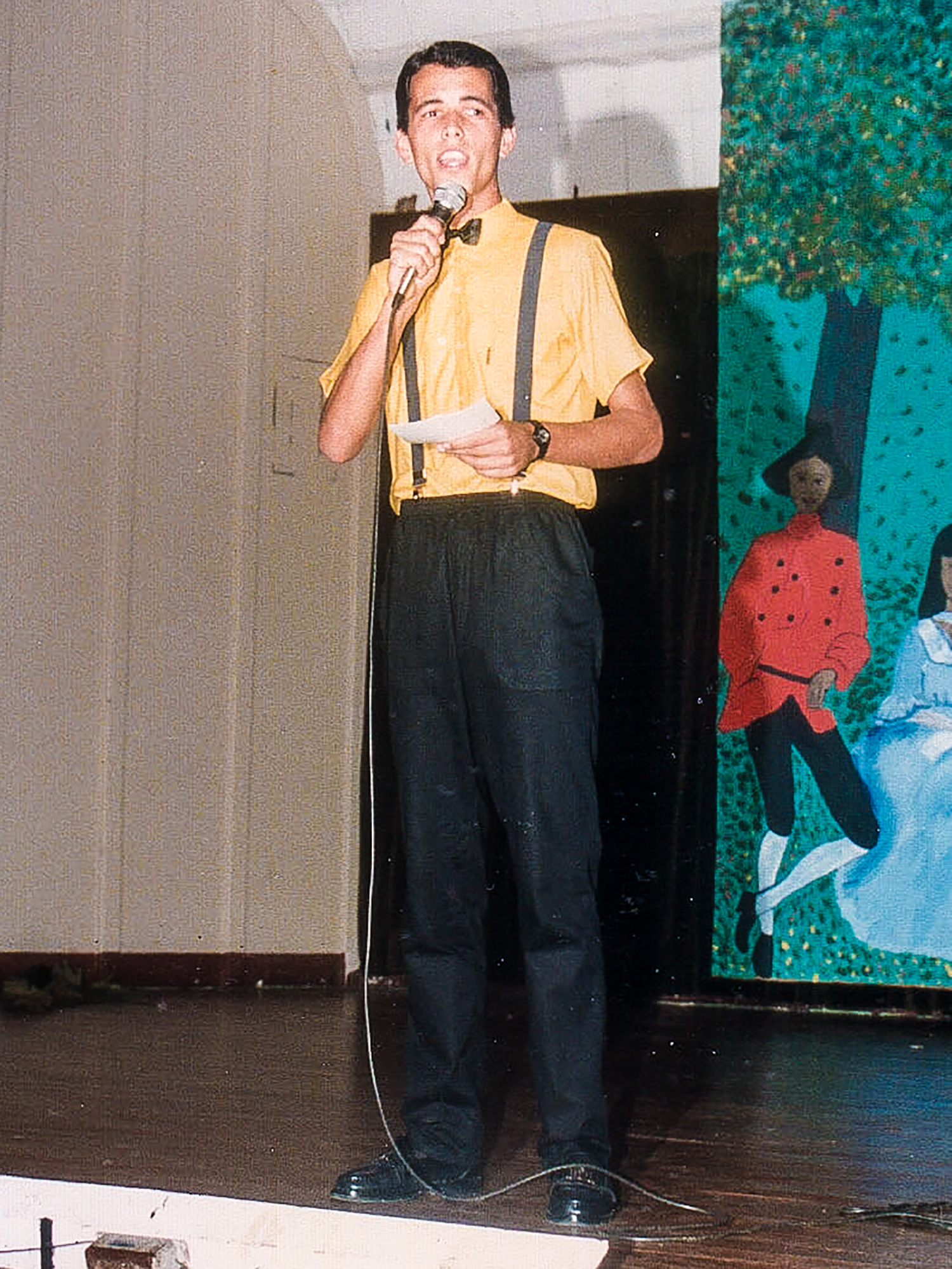
This is just a tiny selection of the artistic stations of my life. Many of the creative things I did (like selling caricatures on the streets and exhibiting my oil paintings in cultural centers) are not documented because they happened before the digital age and at a time when most people didn’t care much about photographing their accomplishments.
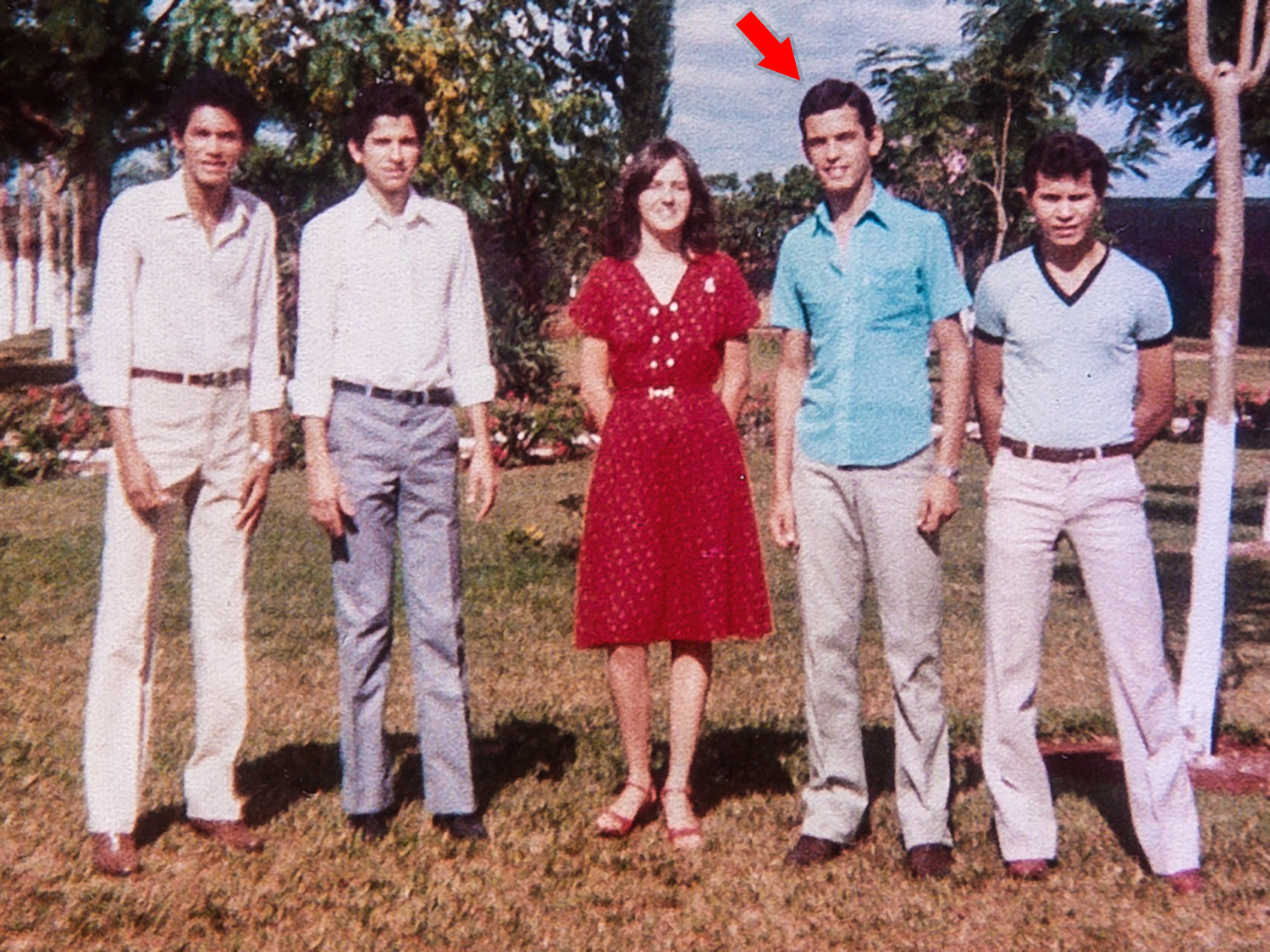
I was the bass of a gospel quartet at the Paraná Adventist Institute (IAP, now Adventist College of Paraná), a boarding high school in the Maringá region. My quartet performed, for example, in a festival at the prestigious Teatro Guaíra, in Curitiba, Paraná’s capital. I sang also in this high school’s choir and was often selected to sing solos (1982).
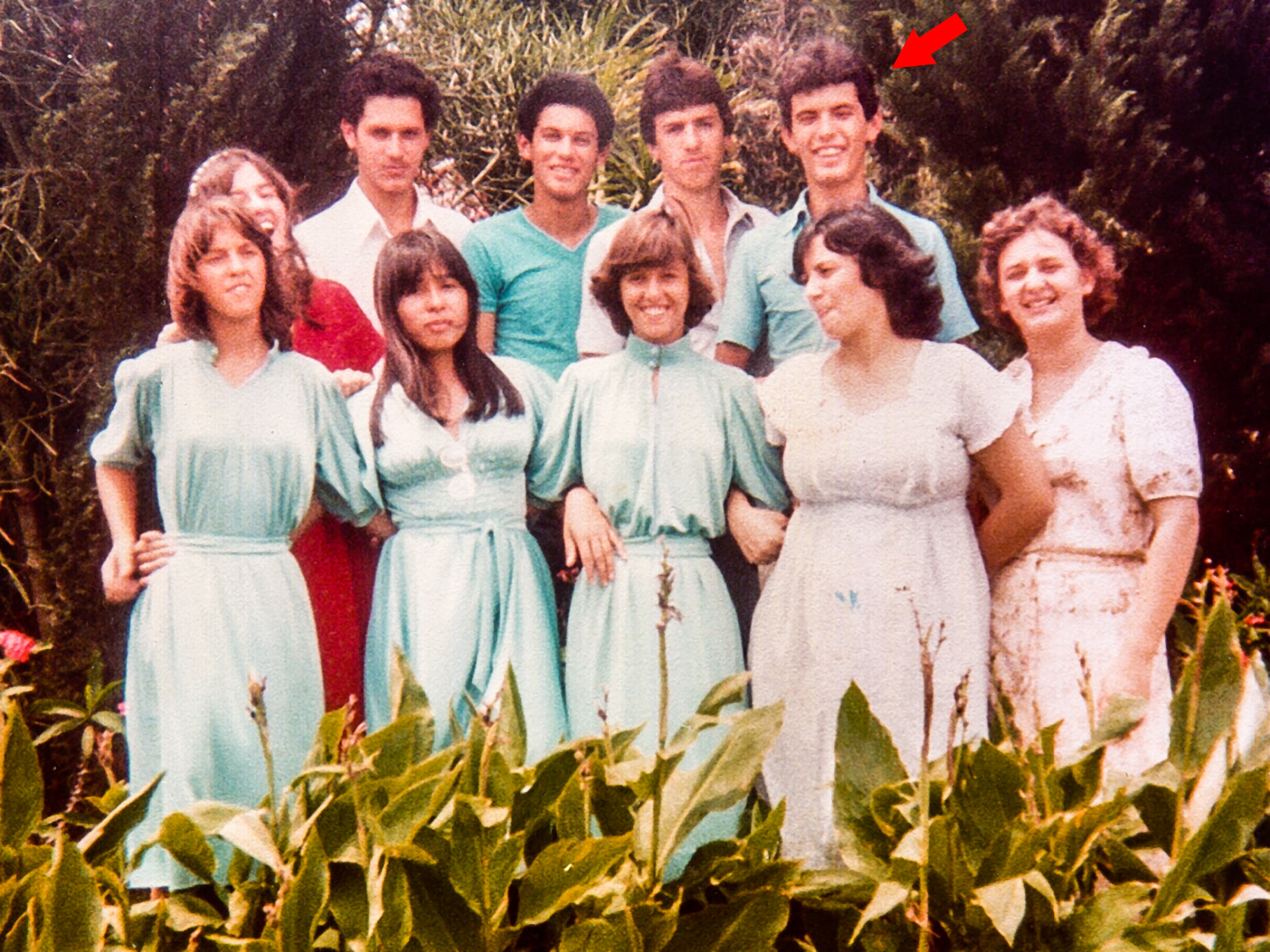
My quartet, with some of the girls from the choir (1983).
In 1987, I went to study Theology at the Adventist Institute of Education (IAE, now Adventist University Center of São Paulo), a boarding college, to become a church pastor. Two and a half years later, with my head full of questions, I abandoned my studies and, with the 600 dollars I had earned selling bibles door to door, went on an adventure to Europe, where I ended up staying. At the Theology college, I sang in the Carlos Gomes choir (which sometimes toured Brazil), but I also did many solos. I nearly became the baritone of the Brazilian The King’s Heralds Quartet, a kind of The Beatles of the Adventist Church.
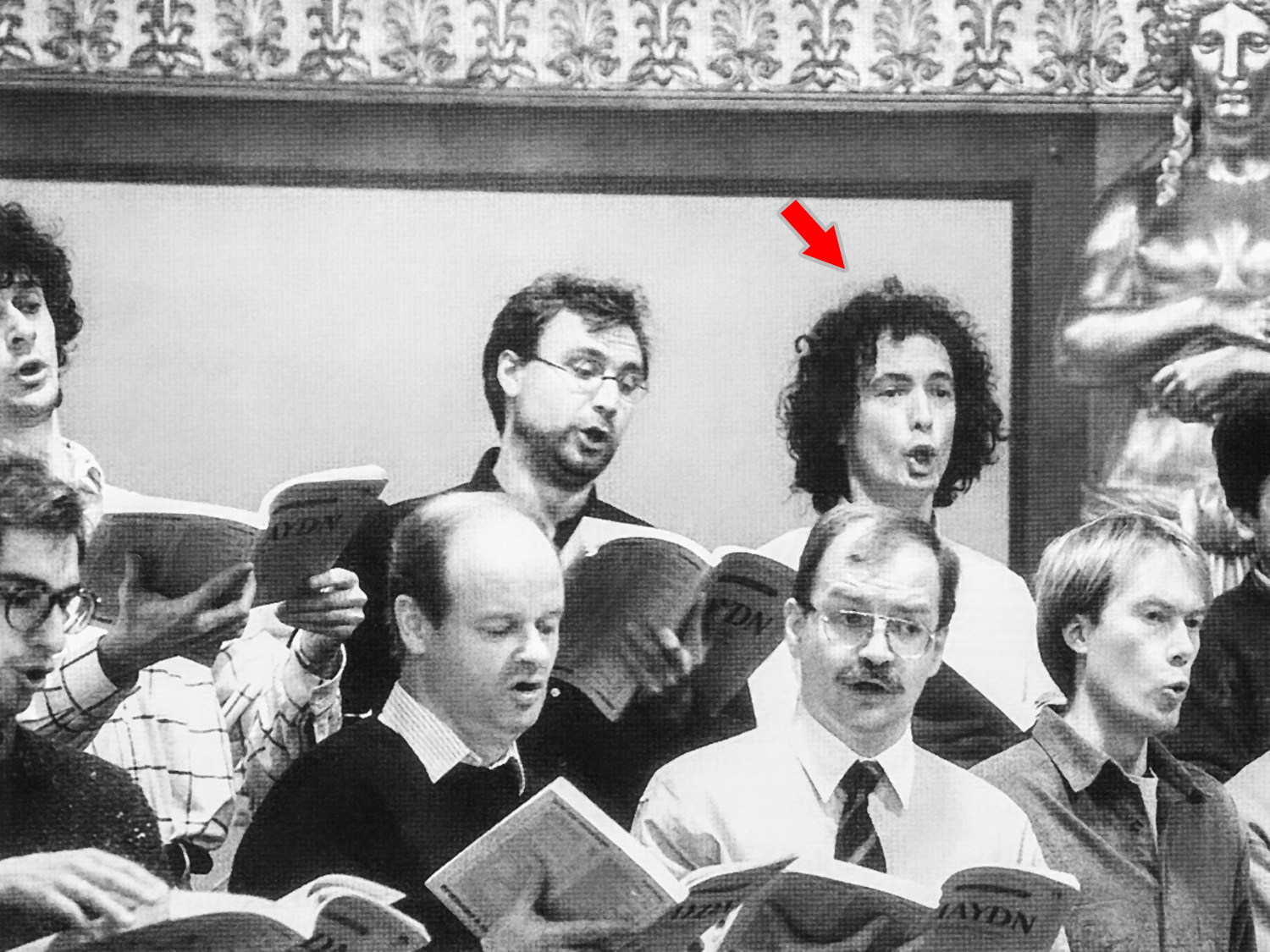
I moved to Europe in 1989. After a short stay in Portugal, France, England and Germany, I went to study German in Austria, where I ended up staying and, at the Konservatorium der Stadt Wien, studied Opera Singing. In the photo, I’m at a rehearsal of the Arnold Schoenberg Choir for a concert at the Musikverein, in Vienna (1994). With this choir, I performed also at the famous Carnegie Hall, in New York.
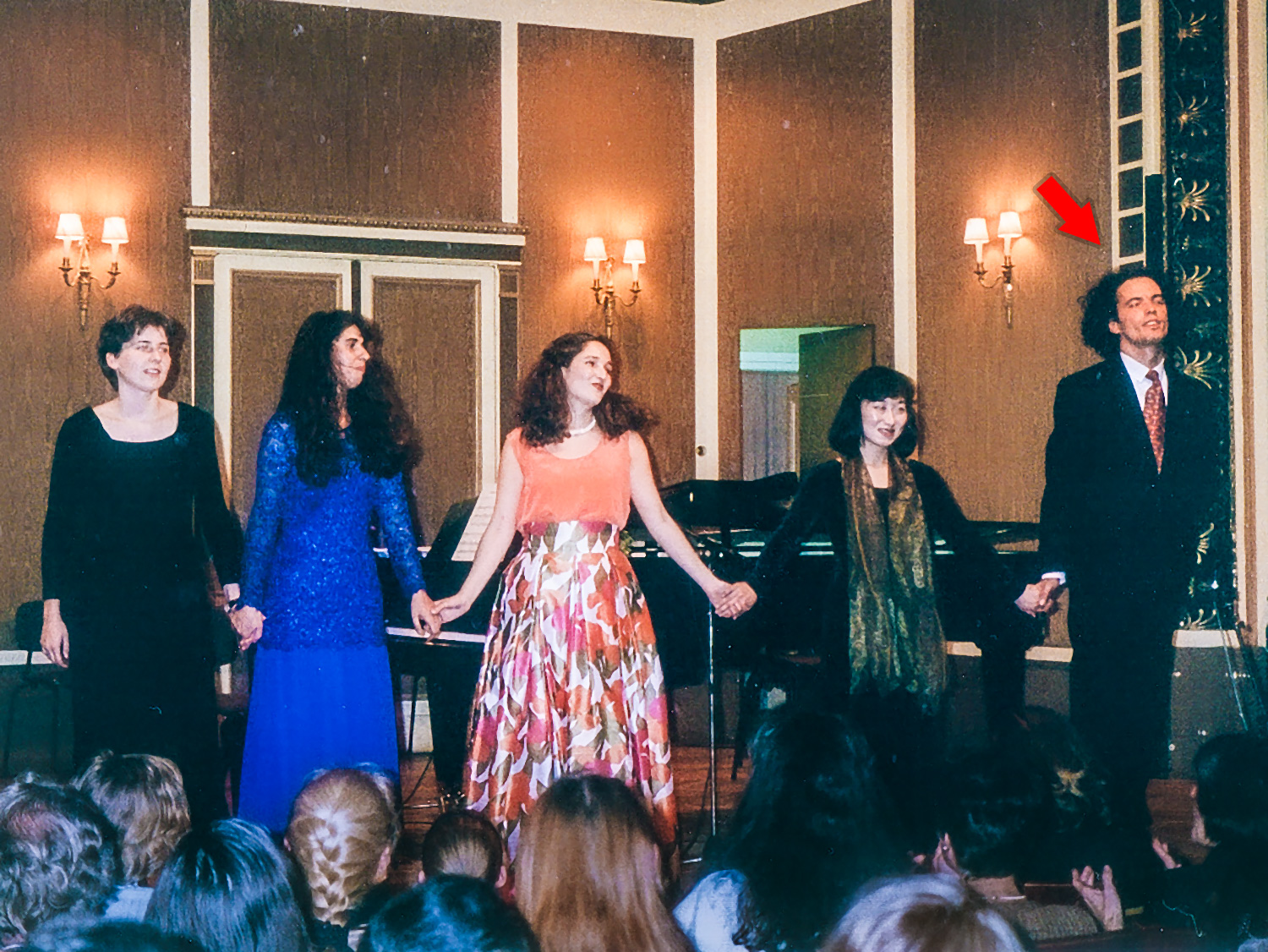
A concert of songs by Heitor Villa-Lobos, at the Schubert Hall, in Vienna, whose objective was to raise public awareness of the problems faced by the indigenous peoples of the Amazon, especially the Yanomami (1996). I sang Three Indigenous Poems.
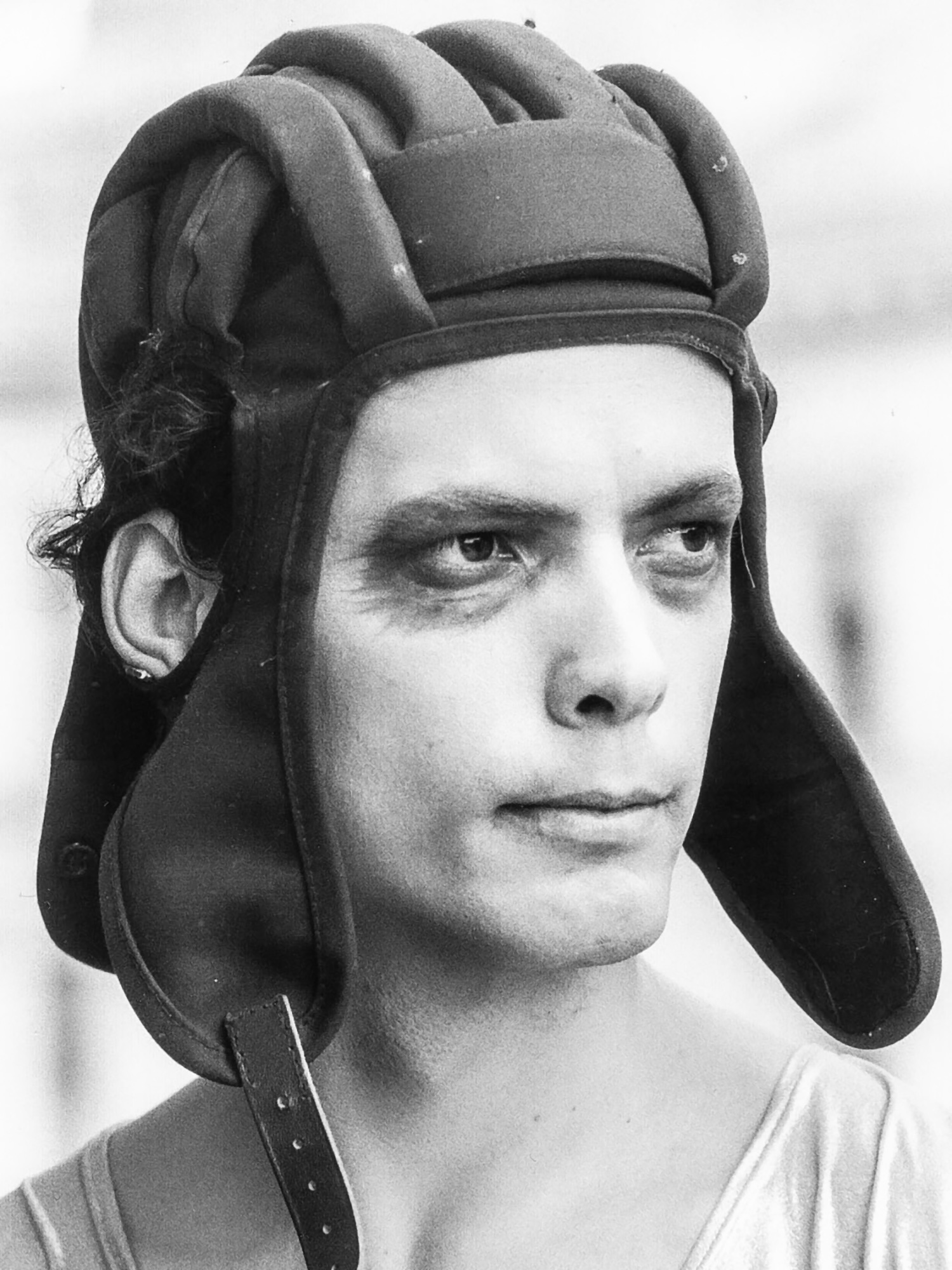
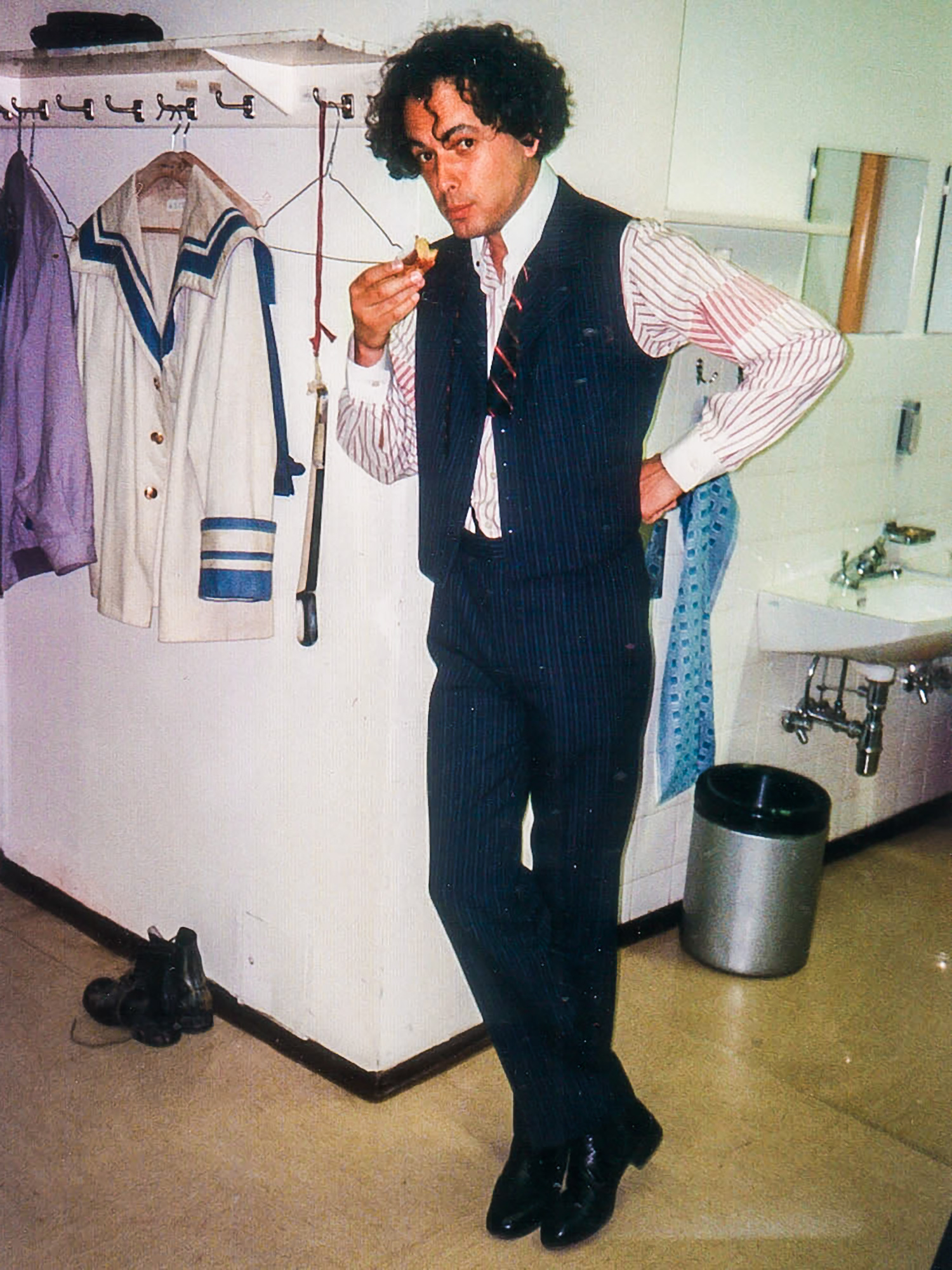
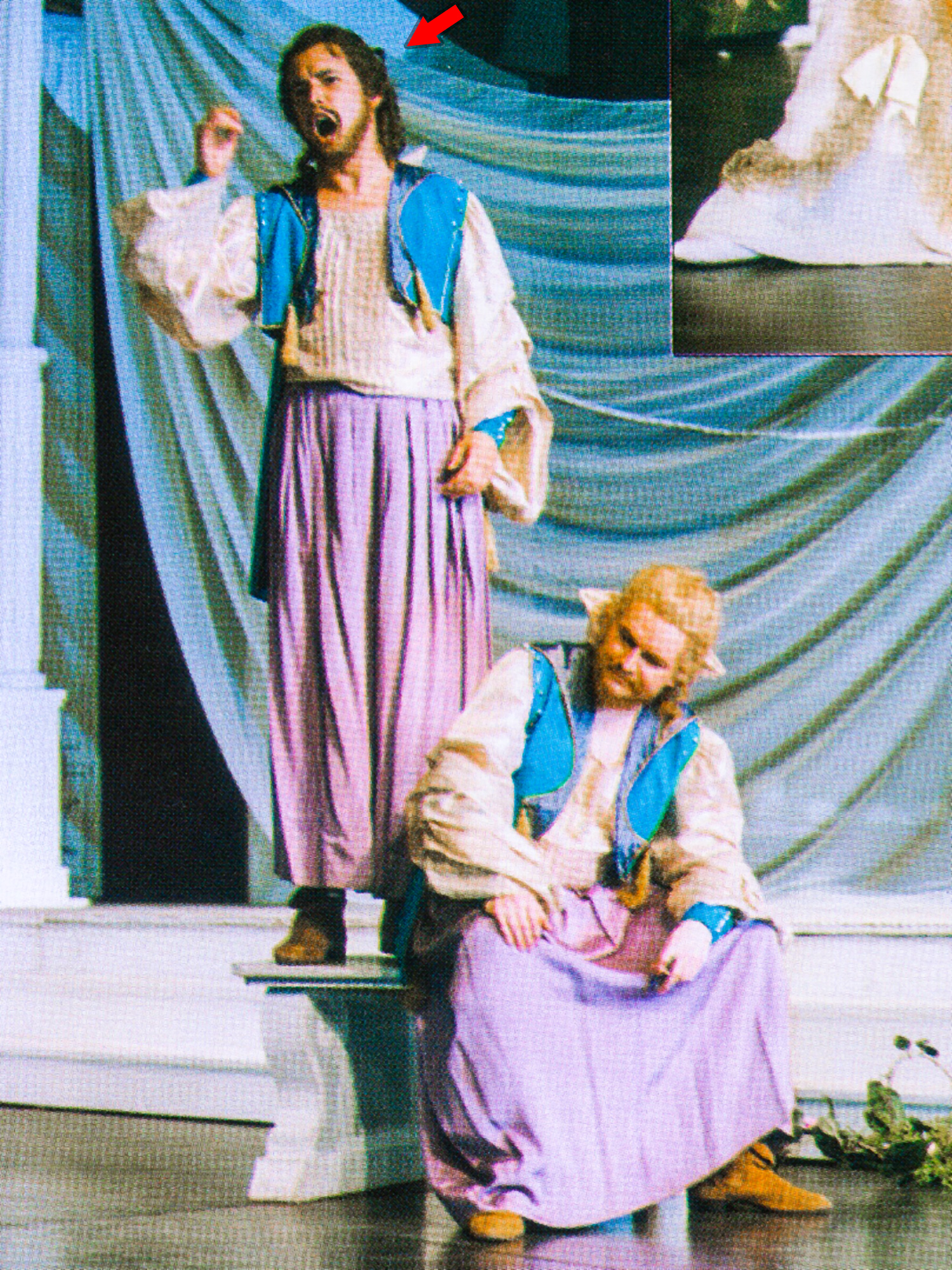
In 1995, I was hired by the largest German-language theater, the Vienna Burgtheater. One of the plays I took part in was performed also in Berlin. In the photo, I’m wearing a costume from the play Orpheus in the Underworld (1996).
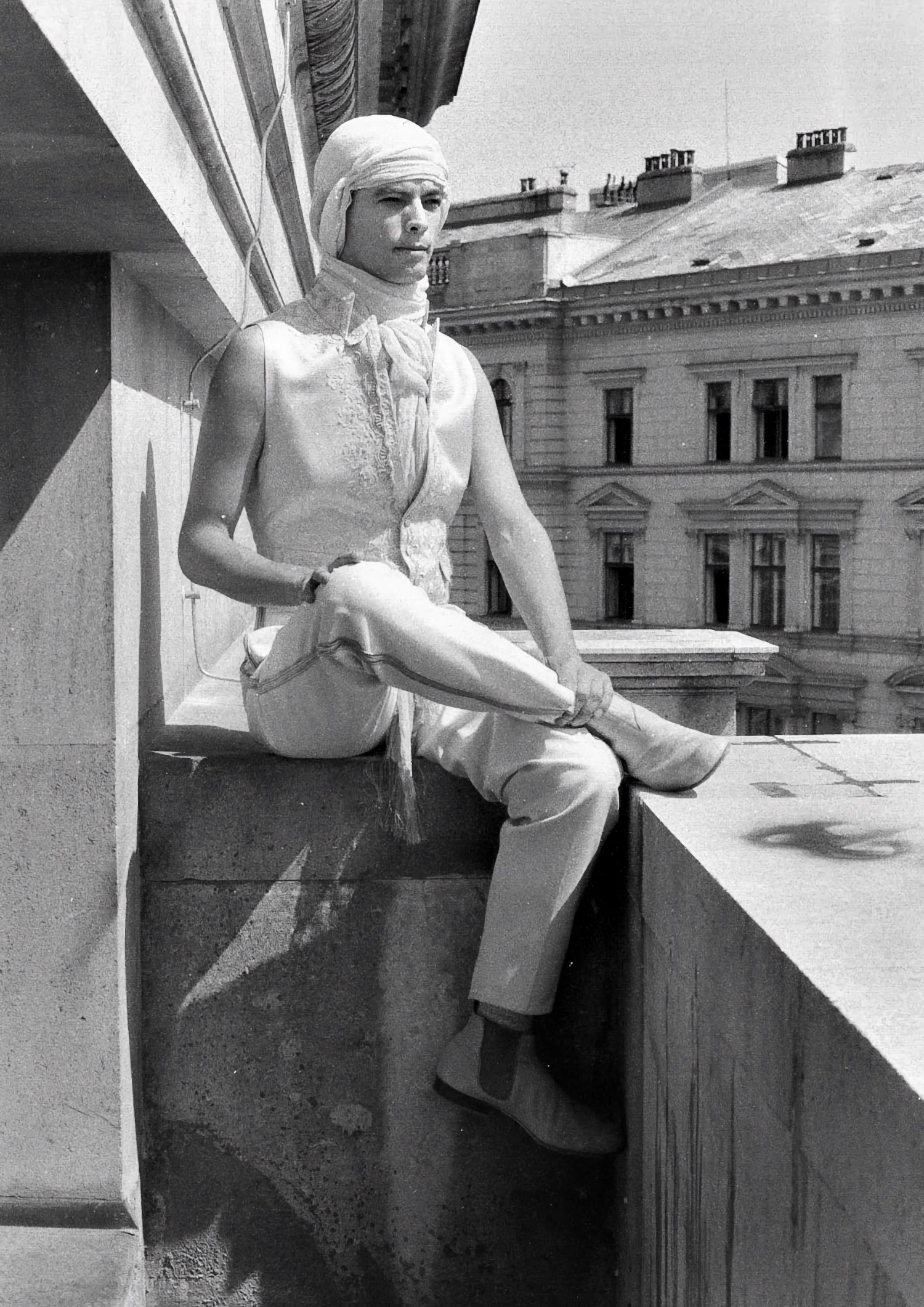
In another costume from the same play.
In the dressing room of the Akademie Theater, in Vienna (1997).
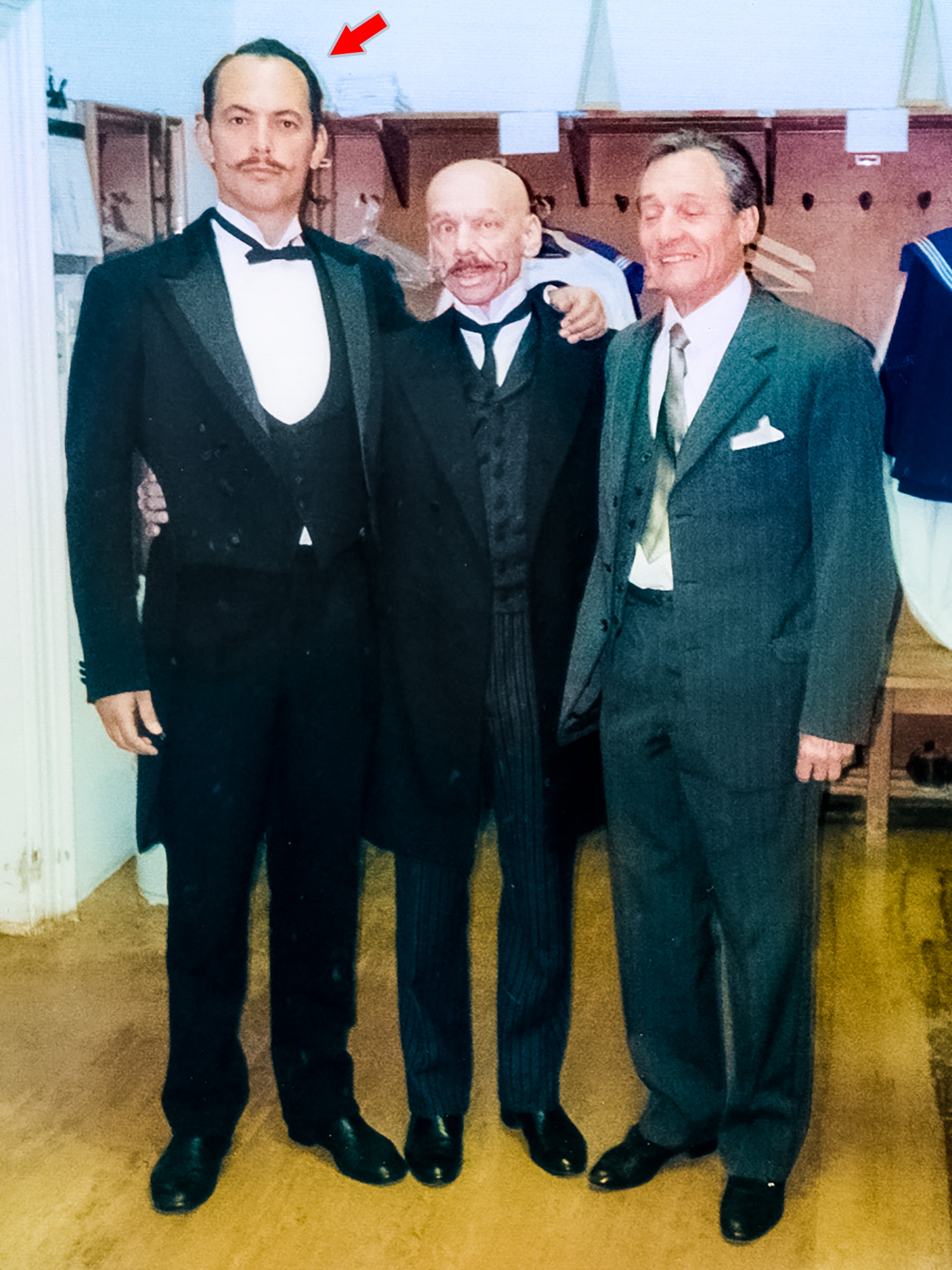
With fellow actors, in another play.
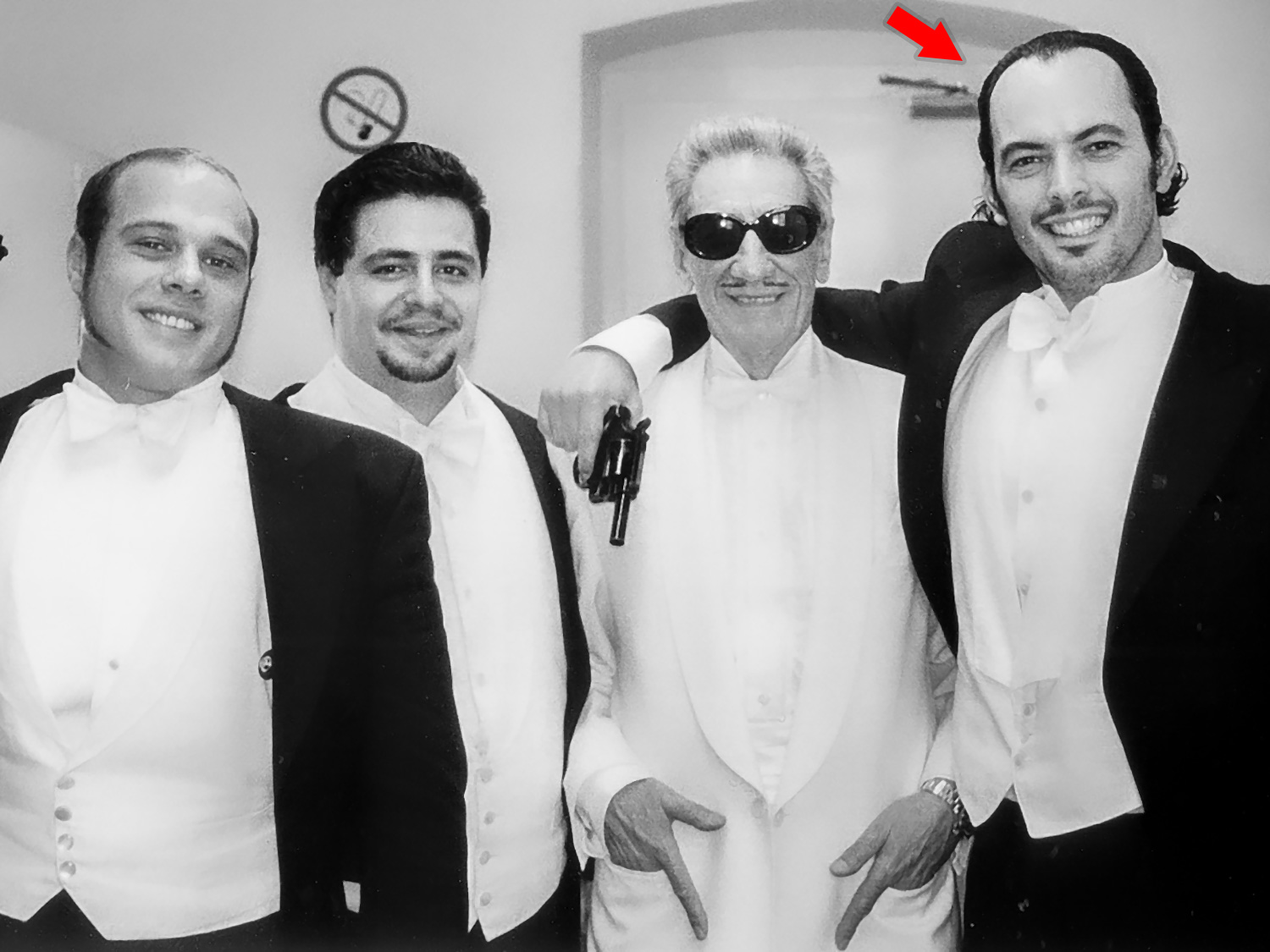
With fellow actors, in another play of the Akademie Theater (1998). The bespectacled gentleman was an icon of Austrian theater.
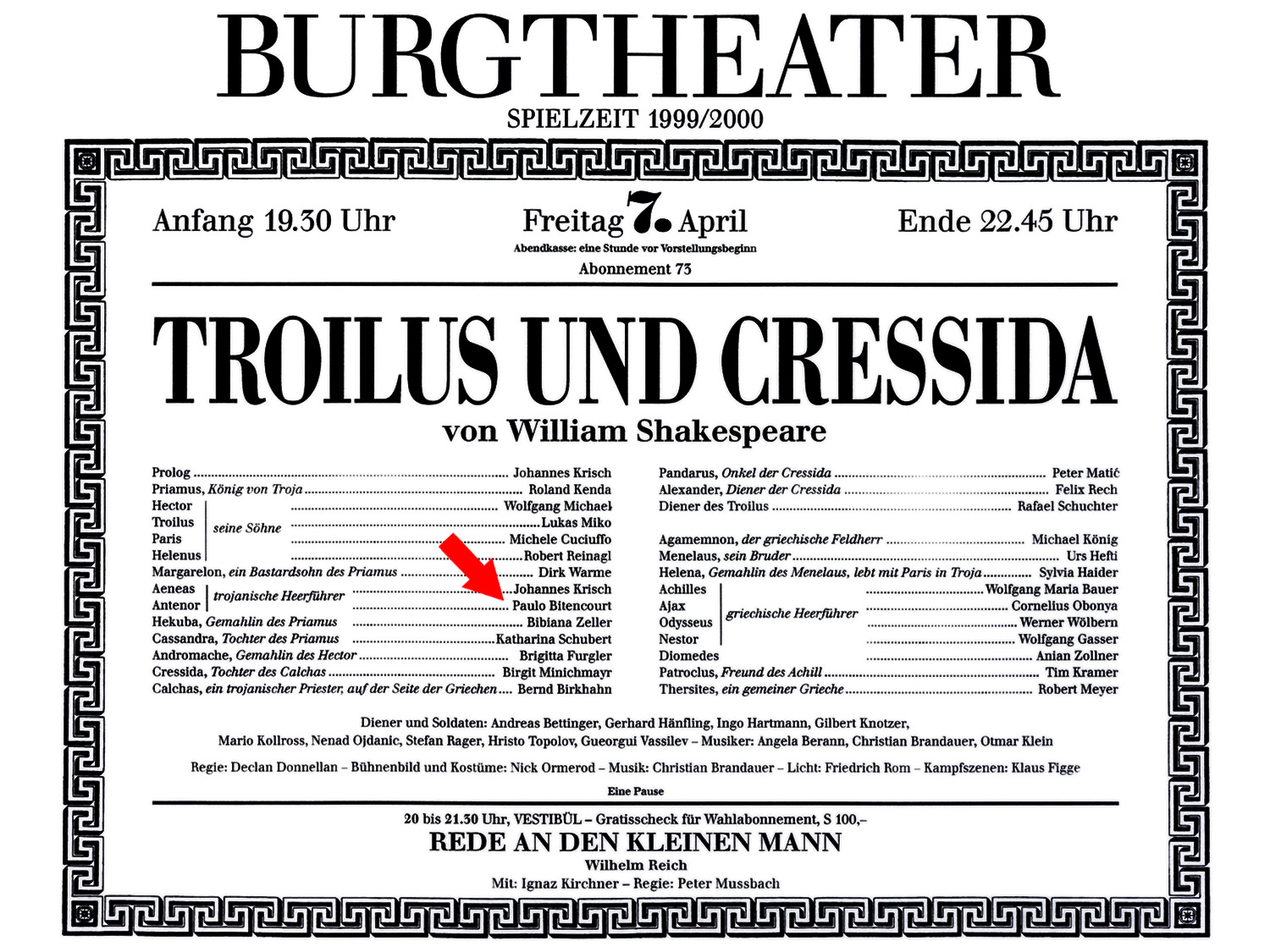
A Burgtheater poster announcing the play for that evening: Troilus and Cressida, by William Shakespeare. My part: Antenor.
Playing Guglielmo, from the opera Così Fan Tutte, by Wolfgang Amadeus Mozart, at the Stadttheater, in Baden, Austria (1999). The newspaper Badener Zeitung says: “Paulo Bittencourt’s interpretation of the lover Guglielmo was in the best of hands, who impressed with his beautiful baritone voice and excellent stage presence”.
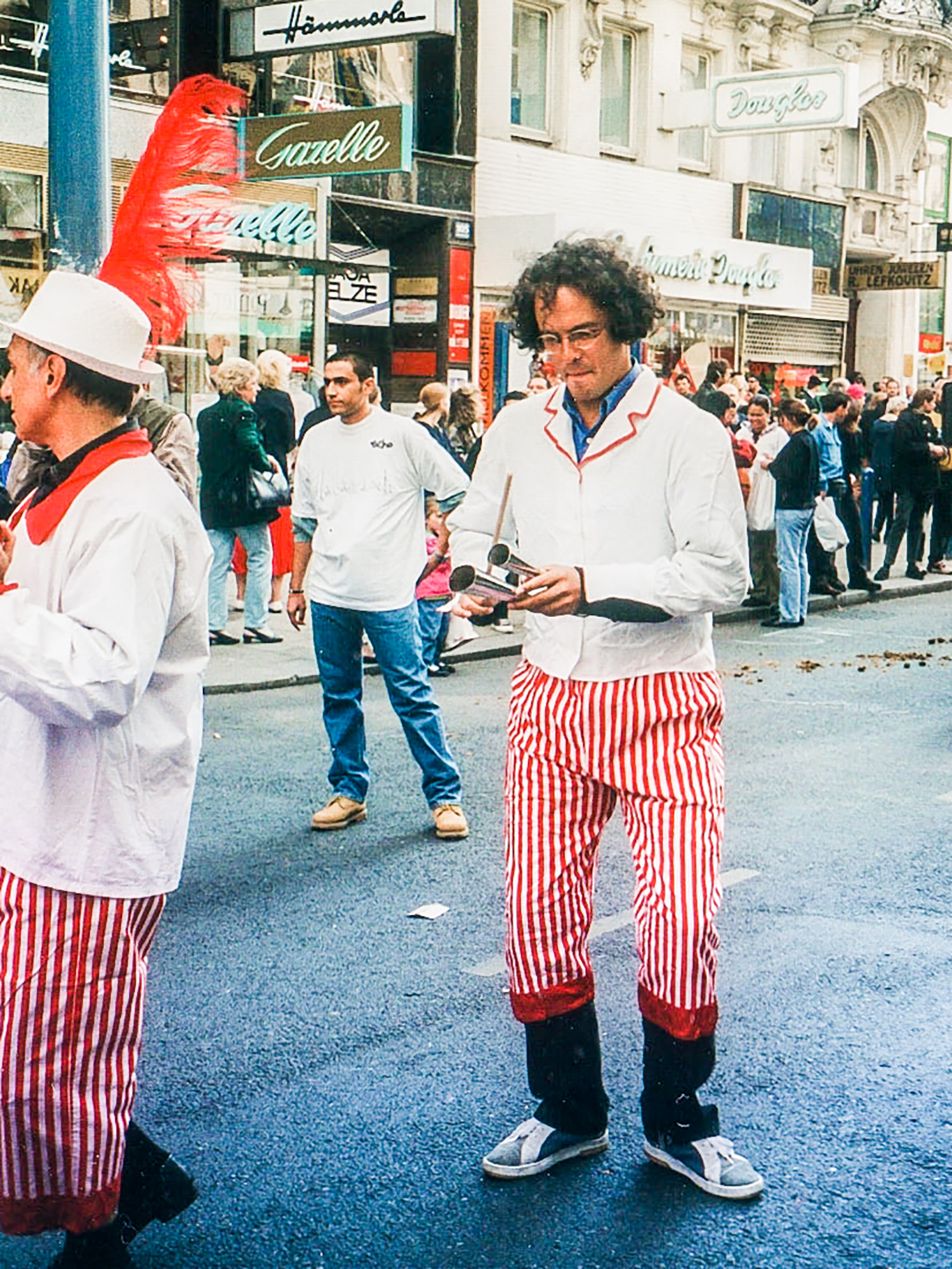
Playing agogô (an Afro-Brazilian musical instrument) in a parade of traditional music from different cultures, in Vienna (1996).
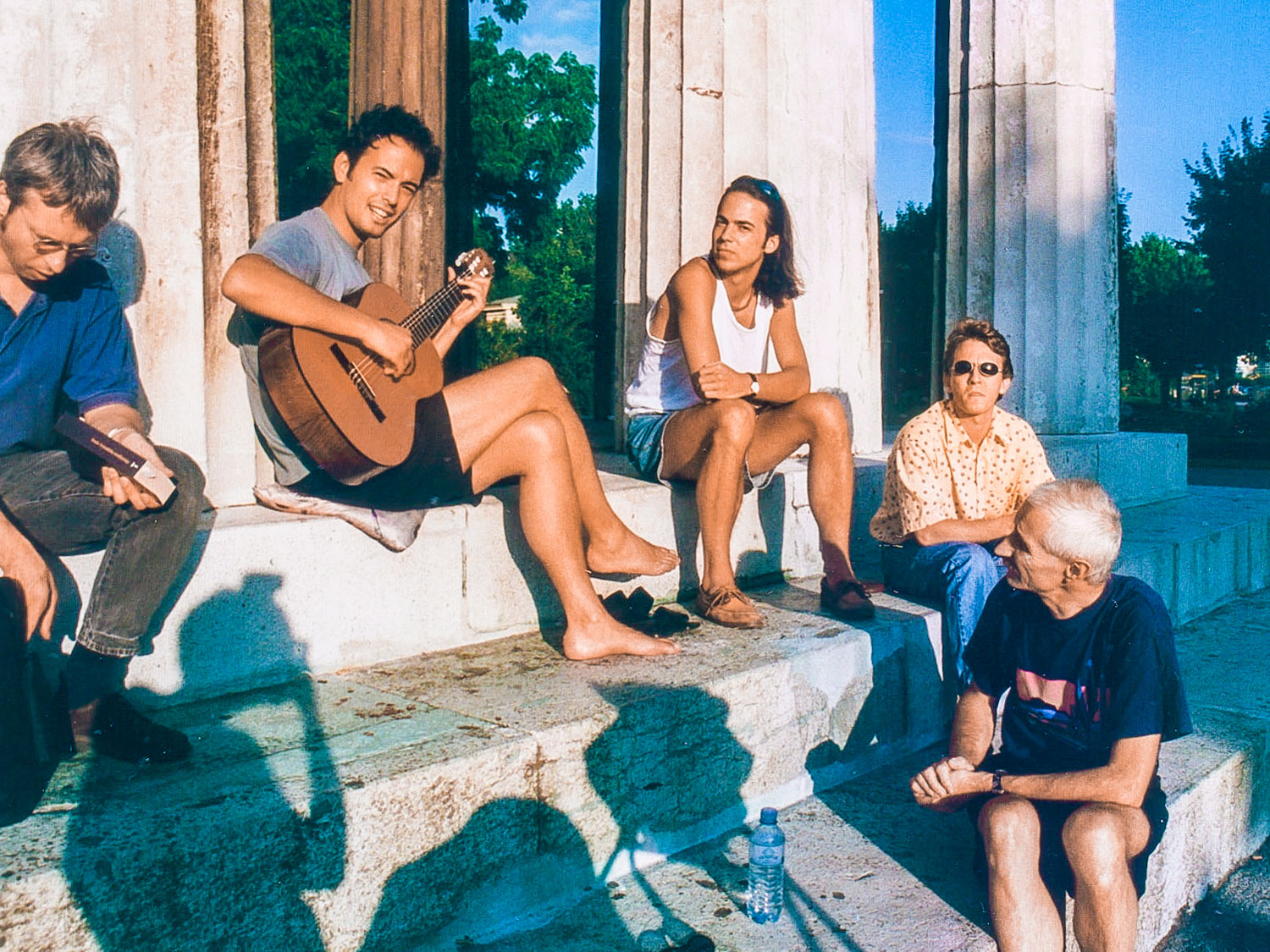
Playing and singing bossa nova in Volksgarten park, in the center of Vienna (1999). One day, I passed by there and saw and heard an Austrian playing bossa nova, which I, despite being Brazilian, barely knew. I was so enchanted that I bought a guitar and, learning by doing, began playing (and singing) in this park myself, which is in front of the Parliament. It became a meeting point, sometimes even with beer or wine.
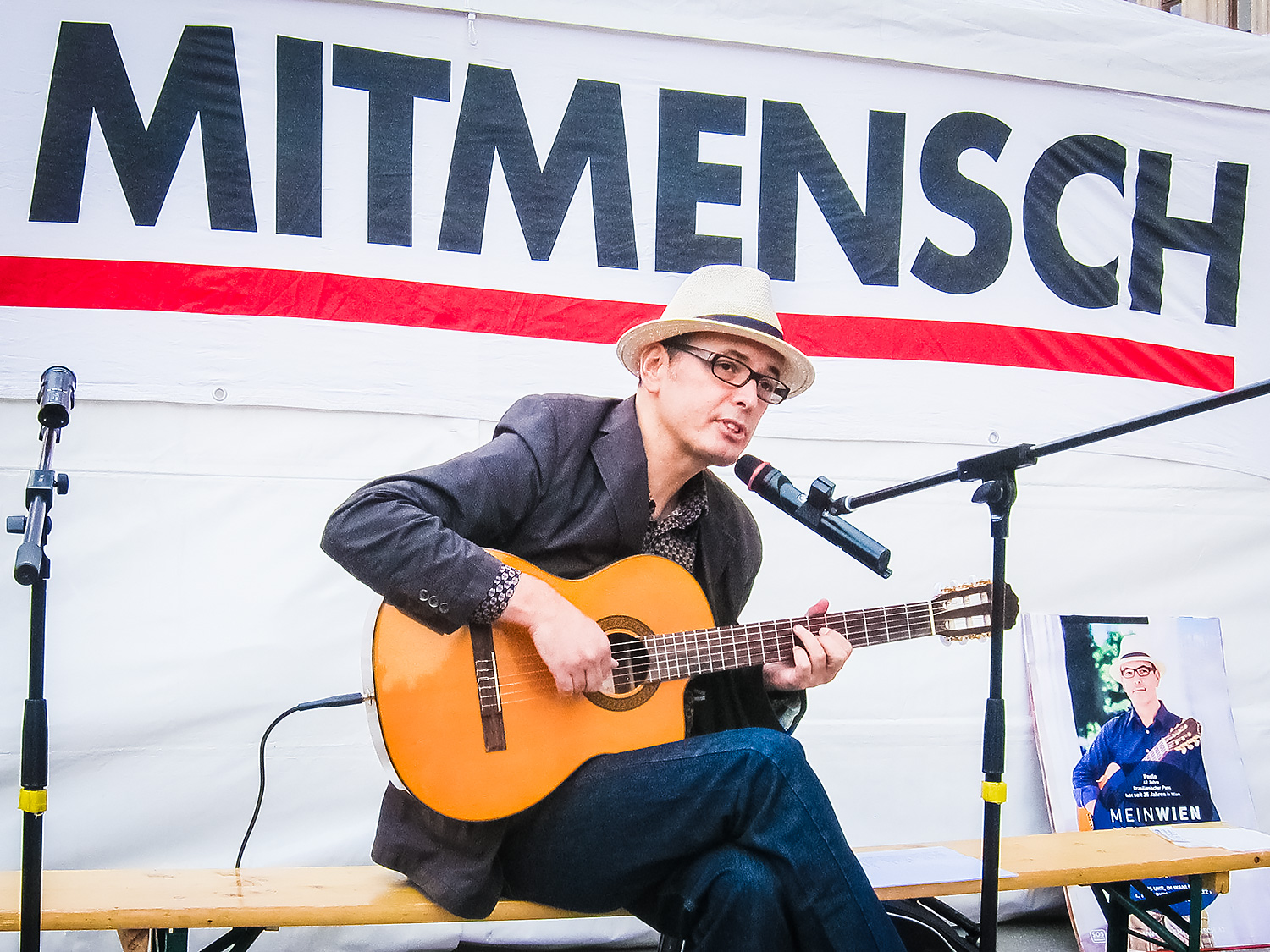
Playing and singing bossa nova at a political event behind the city hall, in the center of Vienna, organized by a human rights NGO, SOS Mitmensch (2015).
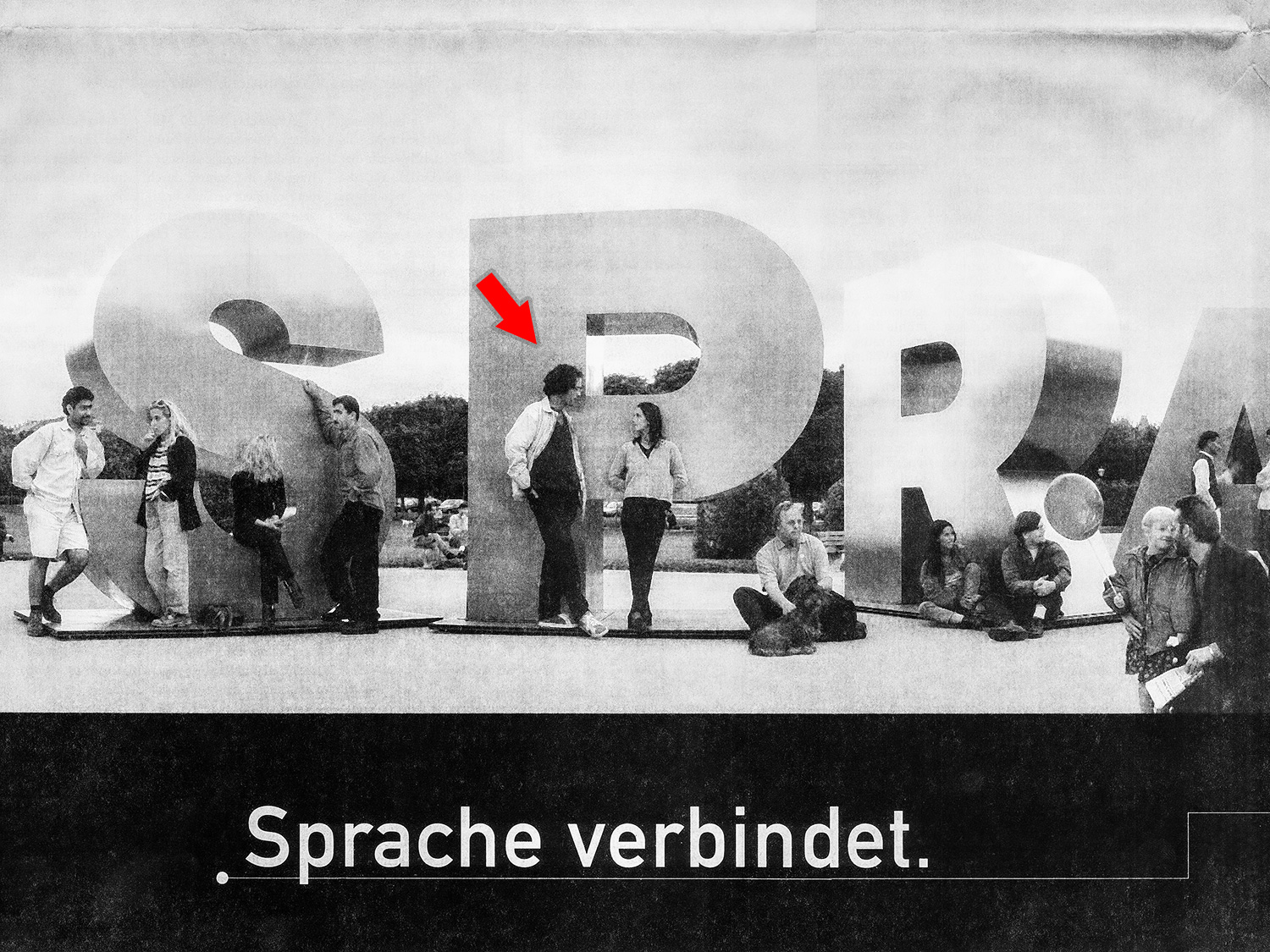
On two full pages of the newspaper Der Standard, in an awareness campaign about the different cultures present in Austria (1996). The name of this place is Heldenplatz, in the center of Vienna. “Sprache verbindet” means “Language unites”.
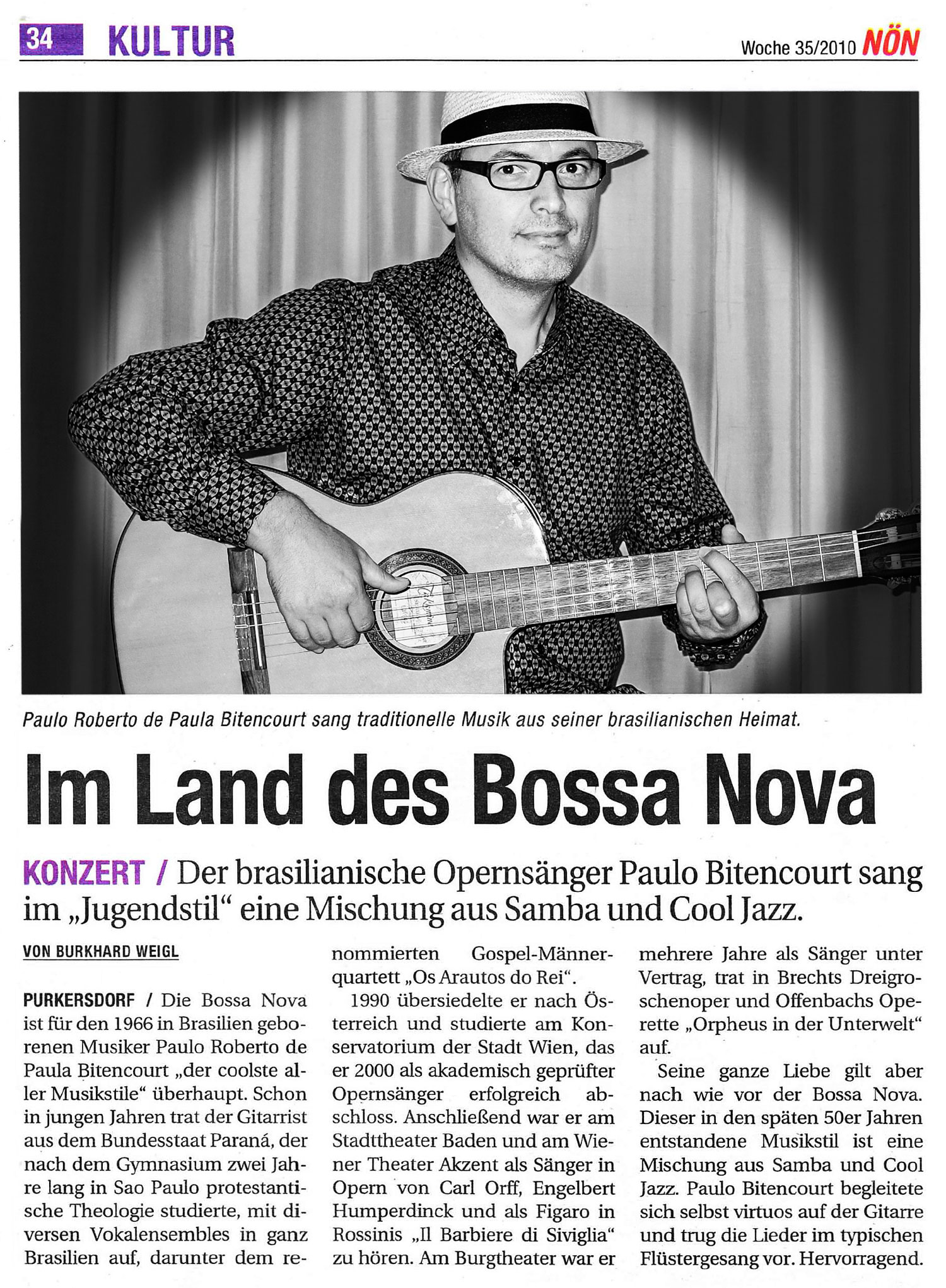
In another Austrian newspaper: “For musician Paulo Bittencourt, born in Brazil in 1966, bossa nova is the coolest of all musical styles. From a young age, the guitarist from the state of Paraná performed with various vocal ensembles throughout Brazil, including the renowned gospel quartet Os Arautos do Rei. In 1990, he moved to Austria and studied at the Vienna Conservatory, from which he successfully graduated in 2000 as a certified opera singer. He subsequently performed at the Stadttheater, in Baden, and the Theater Akzent, in Vienna, as a singer in operas by Carl Orff and Engelbert Humperdinck, as well as in the role of Figaro in Rossini’s Il Barbiere di Siviglia. He was under contract as a singer at the Burgtheater for several years, appearing in Brecht’s The Threepenny Opera and Offenbach’s operetta Orpheus in the Underworld. However, his true passion remains the bossa nova. This musical genre, which emerged in the late 1950s, is a blend of samba and cool jazz. Paulo Bittencourt accompanied himself masterfully on the guitar and performed the songs in their characteristic whispering style. Outstanding!”